
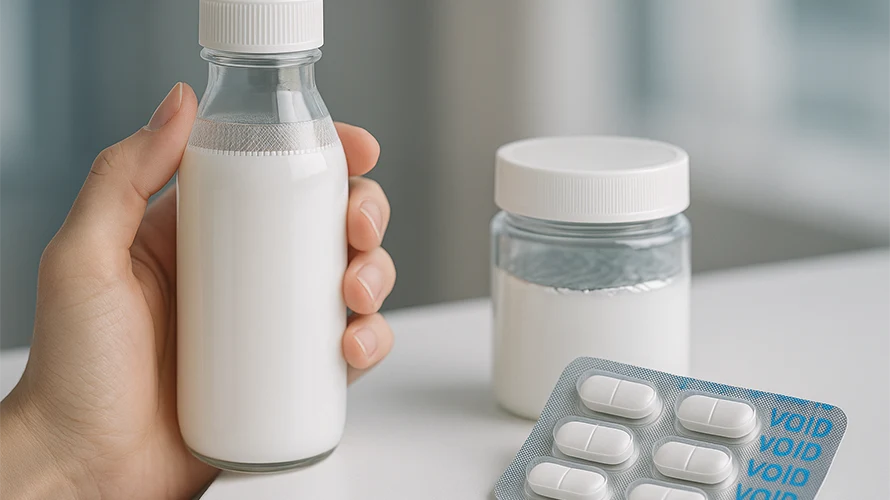
Introduction to Tamper-Evident Packaging
Ever opened a jar of jam and heard that satisfying pop as the seal breaks? That little sound isn’t just reassurance—it’s proof that no one’s touched your food before you did.
That’s the essence of tamper-evident packaging: a simple but powerful design feature that instantly tells consumers whether a product has been opened, altered, or compromised. From over-the-counter medicine bottles and baby food jars to cosmetic creams and nutritional supplements, it’s now one of the most important safeguards in modern packaging.
The need for tamper-evident solutions didn’t appear out of thin air. After a series of infamous product-tampering incidents—most notably the
1982 Tylenol tragedy
—global regulators like the U.S. FDA made tamper-evident packaging mandatory for specific product categories, particularly pharmaceuticals and food. Since then, brands have invested heavily in designs that both protect consumers and build trust through visible integrity.
In this ultimate guide, we’ll break down everything you need to know:
- What tamper-evident packaging actually means (and how it differs from “tamper-proof”).
- The main types—from induction seals and shrink bands to blister packs and security tapes.
- Why it matters for brand protection, consumer safety, and legal compliance.
Whether you’re a packaging engineer, a brand manager, or simply a consumer curious about those safety seals, this guide will help you understand exactly how tamper-evident packaging keeps products safe—and why it’s now a non-negotiable standard across every major industry.
What Is Tamper-Evident Packaging? (Definition & Key Concepts)
So, what exactly is tamper-evident packaging?
In the simplest terms, it’s any packaging system that shows clear, irreversible evidence if someone has tried to open, alter, or interfere with the product.
According to the U.S. Food and Drug Administration (FDA), a tamper-evident package is one that “has one or more indicators or barriers to entry which, if breached or missing, can reasonably be expected to provide visible evidence to consumers that tampering has occurred.”
That means the goal isn’t necessarily to make tampering impossible—it’s to make it immediately obvious when it happens.
Tamper-Evident vs. Tamper-Resistant vs. Tamper-Proof
These three terms often get mixed up, but each has a distinct purpose in the packaging world:
| Term | Meaning | Real-World Example |
|---|---|---|
| Tamper-Evident | Clearly shows if the package was opened or altered. | A plastic shrink band around a beverage cap or an induction foil seal under a lid. |
| Tamper-Resistant | Designed to discourage or delay interference, but not always visibly. | A medicine bottle with a child-resistant push-and-turn cap. |
| Tamper-Proof | Implies it cannot be opened at all—an unrealistic claim for most products. | (Rare) High-security evidence bags or electronic lock enclosures. |
In short:
- Tamper-evident tells you if someone got in.
- Tamper-resistant makes it harder for them to get in.
- Tamper-proof claims they can’t—which, in practice, is nearly impossible.
Most modern packaging actually combines the first two. A shrink band or induction seal offers evidence, while a child-resistant cap provides resistance. Together, they create a secure yet user-friendly experience.
The Psychology Behind Tamper Evidence
Tamper-evident packaging is as much about perception as it is about protection.
Consumers feel safer when they can see a seal—just as they feel uneasy when one is missing. That visual cue builds trust, reinforces brand integrity, and communicates transparency. Even if the product itself is identical, the presence of a visible seal can make or break a purchase decision.
In regulated industries like pharmaceuticals, this visibility isn’t optional—it’s required. But for many consumer brands, tamper-evident design has become a competitive advantage, signaling professionalism and reliability in every opened package.
Why Tamper-Evident Packaging Matters
Tamper-evident packaging isn’t just a nice-to-have feature—it’s a critical line of defence for both consumers and brands.
Every seal, strip, and closure tells a story of safety, authenticity, and trust. But why does it matter so much? Let’s break it down.
Protecting Consumers from Harm
The first and most obvious reason is safety.
Tamper-evident features instantly alert consumers if a product has been opened or altered before purchase. This helps prevent contamination, spoiled products, and even deliberate tampering.
Think of medicine bottles, baby food jars, or bottled beverages—one broken seal could mean the difference between trust and danger. By ensuring tampering is visible, manufacturers can protect public health and reduce liability risks at the same time.
Building Brand Trust and Reputation
Consumers today are more cautious than ever. They check seals, scan barcodes, and even research how brands ensure product integrity.
When customers see that safety band, induction seal, or printed warning (“Do not use if seal is broken”), it sends a powerful message: This brand values your safety and transparency.
That visual assurance builds brand loyalty and repeat purchases—especially in industries like pharmaceuticals, cosmetics, and food & beverage, where trust equals long-term success.
Complying with Global Regulations
In many industries, tamper-evident packaging isn’t optional—it’s the law.
The FDA, European Medicines Agency (EMA), and other global regulators require manufacturers to use tamper-evident designs for certain product categories, especially over-the-counter drugs and food packaging.
Failing to comply can lead to:
- Product recalls
- Legal penalties
- Loss of manufacturing licences
- Long-term damage to brand credibility
In short, compliance isn’t just about following rules—it’s about staying in business and protecting your customers.
Preventing Counterfeiting and Product Theft
Counterfeiters love weak packaging. Without visible security features, fake or refilled products can slip into legitimate supply chains unnoticed.
Tamper-evident seals, serialized labels, and holographic markings help brands authenticate products and track distribution.
In high-value industries—like nutraceuticals, luxury cosmetics, or pharmaceuticals—these visual cues act as a deterrent and a verification tool all in one.
Enhancing Supply Chain Transparency
As global logistics become more complex, packaging plays a vital role in maintaining chain-of-custody integrity.
Tamper-evident closures, tapes, and RFID-enabled seals give logistics teams a way to detect interference during transit, ensuring that what leaves the factory is exactly what arrives at the store.
For B2B suppliers and manufacturers, this traceability is not only good practice—it’s often a procurement requirement.
Supporting Sustainability Without Sacrificing Security
There was a time when “secure” and “eco-friendly” didn’t go hand in hand.
But with modern materials like biodegradable films, paper-based seals, and recyclable plastics, brands can now achieve both.
Today’s challenge is balancing tamper evidence with environmental responsibility—designing packaging that protects the product and the planet.
Types of Tamper-Evident Packaging
There’s no single way to secure a product — and that’s the beauty of tamper-evident design.
Different industries rely on different mechanisms depending on what they’re protecting, the regulatory requirements, and how the consumer interacts with the package.
Below are the most common types of tamper-evident packaging, each with a short explanation, how it works, and where it’s used.
Induction Seals (Foil Liners)
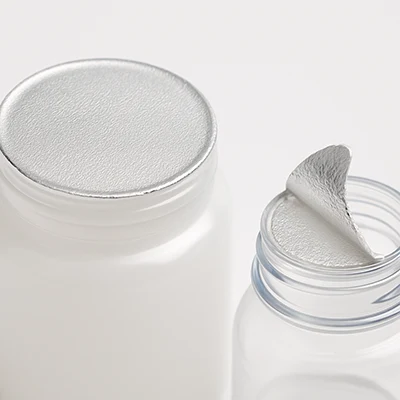
How it works:
- A thin aluminium foil membrane is heat-bonded to the container’s rim using electromagnetic induction. Once sealed, the liner must be peeled or punctured to access the product — and it cannot be reapplied.
Typical uses:
- Food jars, cosmetics, pharmaceuticals, nutraceuticals.
Advantages:
- Airtight and leak-proof
- Protects freshness and prevents odour migration
- Highly visible tamper evidence
Shrink Bands & Shrink Sleeves
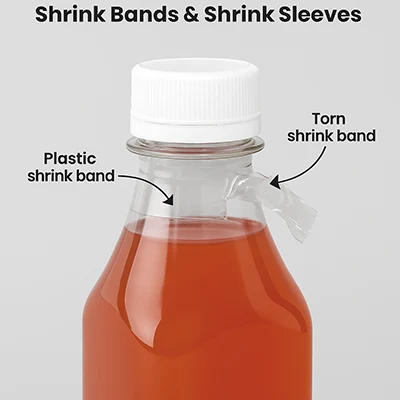
How it works:
- A pre-cut plastic band or full sleeve is slipped over the cap or neck of a container, then heat-shrunk tightly around it. The consumer must tear or cut it to open.
Typical uses:
- Beverage bottles, sauces, liquid medicines, cosmetics.
Advantages:
- Low cost and fast to apply
- Provides 360° branding space
- Easy for customers to recognize
Break-Away Caps & Tamper Rings
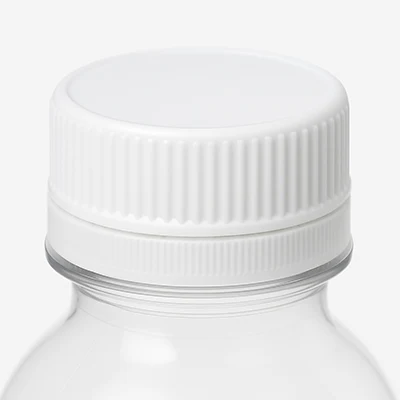
How it works:
- Common on beverage bottles, this cap design features a perforated ring at the base that separates from the main cap upon first twist. Once broken, it cannot re-lock seamlessly.
Typical uses:
- Water bottles, milk jugs, condiments, cleaning chemicals.
Advantages:
- Simple, mechanical evidence of opening
- No extra materials required
- Compatible with high-speed bottling lines
Tamper-Evident Tapes & Labels
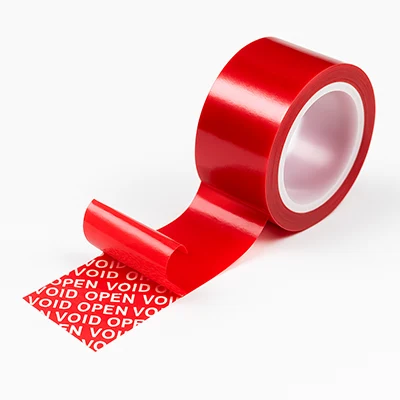
How it works:
- Adhesive seals placed over openings, carton flaps, or closures. When peeled or removed, they leave behind a “VOID” message or destruct, showing clear interference.
Typical uses:
- E-commerce boxes, medical kits, electronics, logistics shipments.
Advantages:
- Works for secondary and tertiary packaging
- Customisable with branding or serial numbers
- Can include holograms or RFID for anti-counterfeiting
Blister Packs & Strip Packs

How it works:
- Each tablet or capsule is sealed in its own plastic cavity with a foil backing. To remove one, you must rupture the foil, which permanently changes the appearance.
Typical uses:
- Pharmaceuticals, supplements, batteries, small consumer electronics.
Advantages:
- Built-in single-use evidence
- Excellent barrier against moisture and oxygen
- Easy for patients to verify unopened doses
Tear Strips & Tear Bands
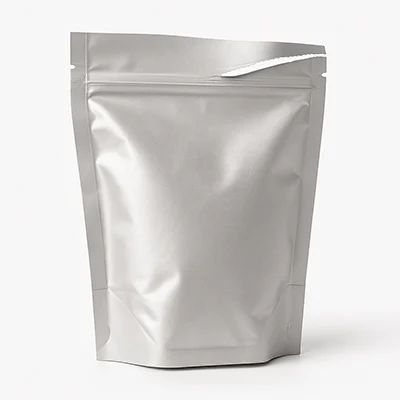
How it works:
- A built-in strip that must be pulled or ripped to open the package. Once torn, it can’t be replaced or concealed.
Typical uses:
- Coffee pouches, pet-food bags, bulk paint pails, mailing envelopes.
Advantages:
- Simple and inexpensive
- Works well with paper, plastic, and foil laminates
- Combines convenience with visual security
Resealable but Tamper-Evident Pouches
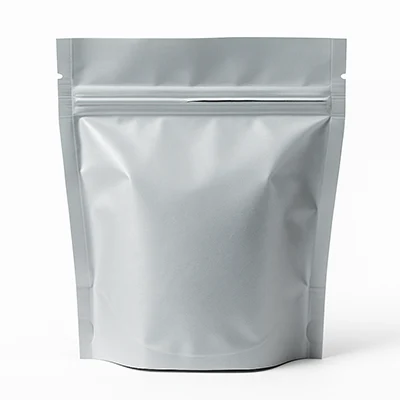
How it works:
- Many modern flexible packages include a tear-off top seal above a zipper closure. The top strip is heat-sealed at the factory; once the consumer tears it off, the missing edge clearly shows prior opening.
Typical uses:
- Snacks, coffee, baby food, powdered supplements.
Advantages:
- Supports freshness after first use
- Clear first-open indicator
- Compatible with sustainable mono-material films
Security Seals & Smart Indicators
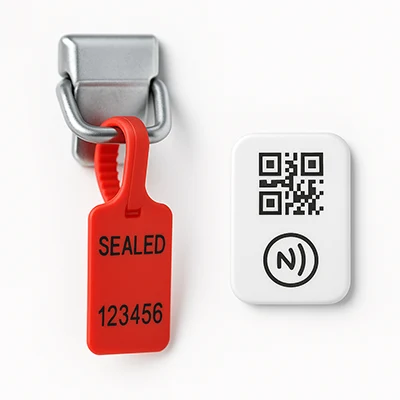
How it works:
- High-security seals use serial numbers, barcodes, or embedded sensors (like RFID or NFC) that record or signal when an item has been opened. Some advanced systems even change colour or log events digitally.
Typical uses:
- Cash transport bags, cargo containers, clinical-trial samples, high-value electronics.
Advantages:
- Ideal for traceability and audit trails
- Difficult to replicate or bypass
- Integrates with digital tracking systems
Multi-Layer Tamper-Evident Systems
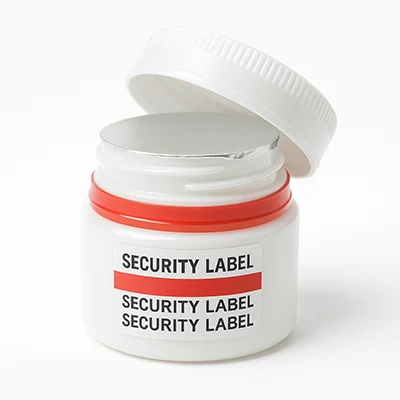
How it works:
- Combines several mechanisms — e.g., an induction seal plus shrink band, or tape plus numbered lock seal — to achieve both deterrence and visible proof.
Typical uses:
- Pharma, cosmetics, and premium consumer goods.
Advantages:
- Redundant protection (if one layer fails, another remains)
- Flexible combinations across packaging tiers (primary, secondary, tertiary)
- Demonstrates a brand’s commitment to safety and compliance
Summary Table: Common Tamper-Evident Packaging Types
| Type | Key Indicator | Common Applications |
|---|---|---|
| Induction Seal | Foil membrane must be peeled or punctured | Food, cosmetics, pharmaceuticals |
| Shrink Band | Plastic sleeve torn or cut | Beverages, sauces, OTC liquids |
| Break-Away Cap | Ring breaks on first twist | Water, dairy, condiments |
| Tamper-Evident Label/Tape | “VOID” text or material destruction | Logistics, e-commerce |
| Blister Pack | Foil cavity ruptures | Medicine, batteries |
| Tear Strip | Strip removed, irreversible | Pouches, envelopes |
| Resealable Pouch | Missing top seal after first tear | Snacks, supplements |
| Security Seal / Smart Tag | Number mismatch or digital alert | Cargo, high-value items |
| Multi-Layer System | Multiple indicators combined | Premium goods, pharma |
Related article:
Four Types of Packaging That Prevent Tampering with Medicine
Design Principles & Best Practices
Creating truly tamper-evident packaging isn’t about adding a random seal or sticker.
It’s about engineering visibility, reliability, and user clarity into every step of the design. The goal is simple: the moment a seal is broken, anyone—from a consumer to a quality-control inspector—should instantly notice.
Below are the core principles and best practices that guide effective tamper-evident packaging design across industries.
Make Tampering Impossible to Hide
A good design ensures that any attempt to open, lift, or reseal leaves irreversible signs.
Use breakable closures, frangible films, or adhesive systems that tear the substrate when removed.
For example, a security tape that leaves behind VOID text or a cap with a detached ring makes it impossible to conceal interference.
Rule of thumb: If a determined person can open it and make it look new again, it’s not tamper-evident.
Prioritise Visibility over Complexity
Consumers should immediately recognise when a package is intact—or not.
Avoid hidden indicators or designs that require inspection tools. Instead, rely on clear visual cues, such as:
- Colour-changing inks or printed “Opened” messages
- Shrink bands around closures
- Pop-button lids that signal first-time opening
Simple, intuitive cues outperform over-engineered ones in both compliance and customer trust.
Balance Security with Accessibility
Security means nothing if customers can’t open the product without frustration.
Excessive force, rigid seals, or awkward tear lines lead to “wrap rage,” damaged packaging, and negative brand perception.
The best tamper-evident designs maintain:
- Controlled opening force (easy for intended users, difficult for tampering)
- Perforated tear lines for effortless access
- Clear printed instructions, e.g., “Pull here to open”
Good design protects the product—not the consumer’s patience.
Ensure Single-Use & Irreversibility
Each tamper-evident feature must be one-time-use only.
Once broken, torn, or peeled, it shouldn’t be repairable or reusable.
For instance, once an induction foil seal is punctured or a tape is removed, the adhesive layer must destroy itself or distort permanently.
This single-use design guarantees that once tampered, the package can never appear factory-sealed again.
Test for Conditions
Even a perfect design can fail in transit or under extreme storage conditions.
That’s why you should always simulate handling:
- Temperature testing: adhesives in cold chains (−20 °C to −80 °C) may crack or lift.
- Humidity & vibration: shipping and warehouse environments can weaken films or tapes.
- Drop and pressure tests: verify integrity under stacking loads or courier handling.
Document every result to demonstrate compliance with FDA, ISO 8317, or EMA guidelines.
Layer the Protection
For high-risk or high-value products, rely on multi-layer security—primary, secondary, and tertiary.
Example: a foil seal on the jar (primary), a shrink band on the cap (secondary), and a security label on the outer box (tertiary).
If one layer fails, another stands guard.
Layering also adds redundancy against counterfeit replacement or accidental seal loss during transit.
Integrate Clear Communication
Tamper evidence only works when the consumer understands it.
Always include visible copy such as:
- “Do not use if seal is broken.”
- “Safety button pops up when opened.”
- “Tear strip must be removed before use.”
Combine icons with concise text. Avoid jargon—your customer should never have to guess what a “tamper-indicator system” means.
Combine Security with Sustainability
Modern packaging design must protect both people and the planet.
Where possible, select mono-material solutions, recyclable labels, or bio-based shrink films that maintain security while lowering environmental impact.
If your design uses multiple components, ensure they can be separated for recycling without compromising safety compliance.
Document and Validate
For regulated sectors like pharmaceuticals or clinical trials, it’s not enough to design well—you must prove it works.
Validate each tamper-evident feature through:
- Visual inspection protocols
- Line testing (torque, seal integrity)
- Shelf-life stability reports
- Supplier certifications (ISO 9001, GMP)
Proper documentation is what separates professional packaging from “DIY safety seals.”
In Short
Designing effective tamper-evident packaging means merging function, visibility, and trust.
Your seals, caps, and closures should speak clearly to the user: “If this looks broken, don’t use it.”
That’s how good packaging protects both your product and your reputation.
Implementation Roadmap (Step-by-Step)
Designing a tamper-evident package is only half the job.
The real challenge lies in implementation—turning ideas into repeatable, compliant, and cost-effective production systems.
Here’s a simple, seven-step roadmap that packaging engineers, brand owners, and manufacturers can follow to achieve reliable tamper-evident protection.
Step 1: Assess Product Risk & Regulatory Scope
Before choosing a seal or closure, start with a risk analysis.
Ask:
- What’s the worst-case scenario if tampering occurs?
- Is the product ingested, injected, or applied to the skin?
- What markets will it ship to (U.S., EU, APAC)?
For pharmaceuticals, follow FDA 21 CFR §211.132 (tamper-evident packaging for OTC drugs).
For food and cosmetics, check local consumer safety regulations or ISO/EN equivalents.
This step ensures your packaging design aligns with legal compliance and product safety requirements from the start.
Step 2: Define the Packaging Objectives
List what the packaging must achieve—beyond just tamper evidence.
Ask yourself:
- Does it need to be resealable after opening?
- What storage or temperature conditions apply?
- Is sustainability a design priority?
Defining these early avoids costly redesigns later. For instance, a cold-chain clinical kit may need adhesive-free carton-integrated seals, while a beauty product may require a branded shrink band for shelf appeal.
Step 3: Select the Right Tamper-Evident Mechanism
Use the comparison matrix from Section 4 to shortlist your best-fit options:
- Induction seals for airtight protection
- Shrink bands for low-cost, high-visibility evidence
- Tamper-evident labels for e-commerce or carton boxes
- Multi-layer systems for high-risk categories
Evaluate based on:
| Criteria | Description |
|---|---|
| Material Compatibility | Works with plastic, glass, metal, or paperboard |
| Manufacturing Speed | Suits your existing filling/sealing equipment |
| Cost per Unit | Balances protection vs. budget |
| Consumer Experience | Easy to open, no wrap rage |
| Recyclability | Fits sustainability targets |
Step 4: Prototype and Test (Try to “Break It”)
Once you’ve chosen your seal or closure type, create small-batch prototypes.
Then, literally try to defeat them.
Perform tampering simulations—cut, reseal, refit, or heat-manipulate the package—and document every outcome.
If your team can open and reclose it without clear evidence, the design fails.
Refine until the package passes:
- Visual tamper test (visible damage)
- Torque or seal-strength test
- Environmental stress test (heat, cold, vibration)
Step 5: Validate Performance Under Conditions
Move from lab to logistics.
Conduct distribution trials simulating real transport conditions—stacking, pressure, humidity, vibration, and temperature changes.
Confirm that tamper-evident features survive intact until reaching the end user.
Record all data for regulatory documentation.
Pharma and food brands often include this as part of their stability and integrity testing protocol.
Step 6: Qualify Suppliers & Materials
A tamper-evident system is only as good as its supply chain.
Choose suppliers who provide:
- Material traceability (batch numbers, certificates)
- ISO/GMP certification
- Consistent performance testing reports
Collaborate early with your packaging vendor to ensure seal compatibility, print accuracy, and QC process alignment.
Step 7: Scale, Monitor & Improve
After launch, monitor the performance of your tamper-evident system in the market.
Gather feedback from:
- Customer complaints or returns
- Distributor inspection reports
- Line operators (ease of sealing, speed, rejects)
Use this feedback to improve the next production run.
Tamper-evident packaging isn’t a one-time project—it’s a continuous improvement loop balancing safety, cost, and user experience.
Regulations & Compliance Overview
Tamper-evident packaging isn’t just good design — in many categories, it’s a legal requirement.
Regulators around the world expect manufacturers to provide visible evidence of tampering to protect consumers from contamination, counterfeit products, and misuse.
Below is a breakdown of the most important regulatory frameworks and compliance standards every packaging professional should understand.
U.S. FDA Regulations
The U.S. Food and Drug Administration (FDA) sets the global benchmark for tamper-evident packaging standards.
The core rule is found in 21 CFR § 211.132, under the Current Good Manufacturing Practice for Finished Pharmaceuticals.
Key points include:
- Mandatory for OTC human-use drugs. Every retail package must include at least one barrier or indicator to entry.
- Design principle: The feature must provide visible evidence if tampering has occurred.
- Labeling requirement: Packages must carry a statement such as “Do not use if seal is broken.”
- Exemptions: Hospital-dispensed or prescription-only drugs are typically exempt, though many still adopt TE features voluntarily for added safety.
Beyond pharmaceuticals, the FDA also influences:
- Food Contact Regulations (21 CFR Parts 170-189) — cover material safety for tamper bands, films, and adhesives.
- Cosmetics & Personal Care Guidance — though not mandated, tamper-evident design is considered a best-practice expectation for consumer safety and brand integrity.
Practical takeaway:
If you manufacture or fill products for the U.S. market, tamper-evident evidence isn’t optional — it’s part of GMP compliance.
European Medicines Agency (EMA) & EU Directives
In Europe, the European Medicines Agency (EMA) governs medicinal packaging safety under the
EU Falsified Medicines Directive (FMD 2011/62/EU)
.
This legislation aims to prevent counterfeit or tampered drugs from entering legitimate supply chains.
Requirements under the FMD:
- Each pack of prescription medicine must have: A unique identifier (2D barcode for traceability). A tamper-evident device that allows verification of package integrity.
- Manufacturers must document validation protocols showing that seals or closures are irreversible once broken.
- Compliance applies across all EU and EEA markets.
In addition, food and cosmetic manufacturers often follow Regulation (EC) No 1935/2004, which demands packaging materials not compromise product safety or authenticity.
Practical takeaway:
In the EU, tamper-evident packaging is both a counterfeit-prevention measure and a legal safeguard protecting patients and consumers.
ISO & Global Standards
While national regulators define legal requirements, ISO standards establish global best practices.
| Standard | Scope | Application |
|---|---|---|
| ISO 21976:2018 | Tamper verification features for medicinal packaging | Defines design criteria for indicators that show interference. |
| ISO 8317:2015 | Child-resistant packaging | Often paired with tamper-evident systems in pharma and household products. |
| ISO 9001 / GMP | Quality management systems | Ensures consistent manufacturing and documentation of TE features. |
| EN 16679:2014 | European guidance on tamper verification | Provides technical testing methods for adhesives, films, and closures. |
Labeling & Consumer Communication Requirements
Regulations don’t stop at the seal — they extend to consumer-facing clarity.
Labels should:
- Explicitly instruct users not to use products if the seal is broken.
- Be legible, durable, and resistant to moisture or abrasion.
- Include manufacturer information and traceability codes where applicable.
Non-compliance in labeling can be treated as misbranding, carrying fines or forced recalls.
Documentation & Validation Best Practices
Auditors expect written proof that tamper-evident systems have been designed, tested, and validated.
Maintain:
- Design records (drawings, material specs, supplier certificates).
- Test reports (seal strength, torque, tamper simulations).
- Change-control documentation (any modification to closures or materials).
- Training records for line operators and QA personnel.
Proper documentation not only satisfies regulators but also demonstrates professional due diligence in quality management.
Global Trends & Future Outlook
Governments are tightening traceability and sustainability rules. Expect to see:
- Digital tamper verification (QR-linked proof of integrity).
- Blockchain serialization for pharma and food logistics.
- Eco-friendly compliance — push toward recyclable, non-PVC shrink films and solvent-free adhesives.
Brands that combine tamper evidence + digital tracking + sustainability will stay ahead of upcoming regulatory shifts.
Sustainability & Future Trends
Tamper-evident packaging has long been about safety and security — but now, it must also prove sustainability.
As brands and regulators tighten their environmental targets, designers are under pressure to create packaging that protects both the consumer and the planet.
The Shift from Single-Use Plastics to Circular Materials
Traditional tamper-evident seals rely heavily on PVC shrink films and multi-layer laminates — strong, yes, but difficult to recycle.
The new generation of materials replaces them with mono-material and bio-based alternatives:
- PET-G and polyolefin shrink films compatible with existing recycling streams.
- Paper-based tear strips and fiber seals for dry goods.
- Compostable biopolymers (PLA, PHA) that degrade safely under industrial composting.
Extended Producer Responsibility (EPR) laws
This transition allows brands to meet
without sacrificing product security.
Designing for Disassembly and Material Separation
Sustainability starts at the concept stage.
Every component — cap, liner, label, and seal — should be easy to separate for recycling or reuse.
For example:
- Replace aluminum foil seals with same-material PP induction liners on PP jars.
- Use water-based adhesives that release cleanly during washing.
- Avoid combining incompatible polymers like PVC and PET.
The rule of thumb: if recyclers can’t separate it, consumers can’t recycle it.
Reducing Material Footprint without Compromising Safety
Modern technology enables thinner, lighter, and stronger tamper-evident components.
Examples include:
- Ultra-thin induction foils that maintain seal strength while cutting aluminum use by up to 30 %.
- Low-gauge shrink sleeves with the same clarity and shrink ratio.
- Multi-function closures combining child resistance, resealability, and tamper evidence in one part.
Less material means lower carbon emissions, faster line speeds, and reduced shipping weight.
Smart & Digital Tamper Verification
The future of tamper evidence is not just physical — it’s digital.
Emerging technologies combine packaging security with traceability and consumer engagement:
- QR or NFC-linked tamper tags that record first opening.
- Blockchain serialization that logs each scan through the supply chain.
- Color-changing inks or smart sensors that detect heat, UV, or time-based exposure.
These solutions help brands combat counterfeiting while offering end users instant proof of authenticity.
Future Outlook: Secure + Sustainable + Smart
The next generation of tamper-evident packaging will combine:
- Eco-design: recyclable and refill-ready materials.
- Smart verification: IoT-linked seals for real-time authenticity.
- Consumer transparency: visible, data-driven assurance of both safety and sustainability.
Brands that master this trio will lead the market — proving that security and sustainability are no longer opposites, but allies.
Buyer’s Guide & Vendor Checklist
Choosing the right tamper-evident solution can feel overwhelming.
Between materials, regulations, and sustainability goals, every decision affects cost, compliance, and customer trust.
This guide helps you evaluate vendors and packaging options with a simple, structured approach.
Core Buying Criteria
When shortlisting tamper-evident packaging suppliers, compare each option against these key decision factors:
| Criteria | What to Look For | Why It Matters |
|---|---|---|
| Visibility of Evidence | Seal shows clear visual change when opened (tear, void, colour shift). | Ensures immediate consumer recognition and legal compliance. |
| Defeat Resistance | Difficult to remove or reseal without leaving marks. | Prevents counterfeiting or fraudulent refills. |
| Ease of Opening | User can open safely with minimal force. | Reduces “wrap rage” and improves brand perception. |
| Line Compatibility | Works on existing filling, capping, or heat-seal machinery. | Avoids costly equipment upgrades. |
| Material Fit | Compatible with your container substrate (glass, PET, HDPE, aluminium). | Guarantees reliable sealing performance. |
| Sustainability | Mono-material, recyclable, or low-carbon options. | Meets ESG and EPR goals. |
| Regulatory Compliance | Meets FDA 21 CFR §211.132, EMA FMD, or ISO 21976. | Avoids audit findings and recall risks. |
| Supplier Support | Offers testing data, traceability docs, and design assistance. | Ensures long-term reliability and technical partnership. |
Vendor Qualification Checklist
Before you place an order, confirm your vendor can meet these standards:
Documentation:
- Material safety data sheets (MSDS) and certificates of compliance.
- ISO 9001 / GMP manufacturing accreditation.
- Traceable batch records and QC inspection reports.
Technical Support:
- Ability to provide torque, seal-strength, and tamper-simulation test results.
- Engineering guidance for integration on existing production lines.
Design Flexibility:
- Offers custom sizes, embossing, or printed messaging (“Do not use if seal is broken”).
- Willingness to prototype or co-develop new features (e.g., recyclable induction liners).
Sustainability Commitment:
- Uses recyclable or compostable materials.
- Transparent CO₂e data per 1 000 units.
- Take-back or recycling programs for industrial waste.
After-Sales Reliability:
- Consistent lead times and MOQ flexibility.
- Technical training for QA and line operators.
- Quick response to seal-failure or recall investigations.
Consumer Tips & Safety Guidelines
Even the most advanced tamper-evident packaging means nothing if consumers don’t know what to look for.
Educating end-users is the final step in building trust — and it’s also a great opportunity for brands to demonstrate transparency and responsibility.
Always Check Before Use
Before opening, inspect every package carefully:
- Look for broken seals, torn shrink bands, or punctured foil liners.
- Avoid products where a “VOID” label is missing or already activated.
- For pharmaceuticals, check that the cap ring is intact and unbroken.
- Never consume food or medicine that looks previously opened, no matter how small the damage appears.
If something looks off, report it immediately to the retailer or manufacturer.
Understand the Safety Features
Different products use different tamper indicators.
Here’s how to read them correctly:
| Packaging Type | What to Look For | Safe Condition |
|---|---|---|
| Shrink Band | Smooth, tight film around cap | Fully sealed and untorn |
| Induction Seal | Foil under cap | Firmly attached, no air gaps |
| Break-Away Cap | Plastic ring around bottle neck | Ring unbroken and snug |
| Blister Pack | Aluminum foil over cavity | Foil smooth and unruptured |
| Tamper-Evident Label | VOID or checkmark pattern | Label unbroken, text hidden |
When brands print these explanations clearly on packaging, customers instantly know how to verify authenticity — reducing confusion and unnecessary returns.
Don’t Reseal or Reuse Safety Components
Once broken, tamper features can’t be restored.
Reusing an opened container or refitting a torn seal can:
- Damage the closure system.
- Create hygiene or contamination risks.
- Invalidate product warranties.
Instead, dispose responsibly and recycle components according to local sorting rules (e.g., separate plastic caps from glass bottles).
Keep Safety Messages Visible
Consumers rely on clear visual communication.
When designing your packaging graphics:
- Include short instructions near the opening area — “Do not use if seal is broken.”
- Use contrasting colours so tamper features stand out visually.
- Avoid cluttered artwork that hides perforations or rings.
- Add multilingual safety text if exporting internationally.
Simple, consistent labelling builds confidence and prevents misuse.
Brand Responsibility in Consumer Education
Leading brands now include tamper-evidence guides directly on:
- Outer boxes (illustrations of safety seals).
- Websites and FAQ pages.
- QR-based interactive manuals that show what an intact seal should look like.
This proactive education not only prevents misuse but also strengthens brand integrity — because a well-informed customer is the best quality-control partner you can have.
Conclusion
Tamper-evident packaging isn’t just about safety — it’s about trust. It reassures consumers that every product they open is fresh, secure, and exactly as you intended. As packaging continues to evolve, brands that prioritise visibility, usability, and sustainability will always stand out.
, we help global brands design packaging that’s both secure and sustainable. From induction seals to custom closures, our engineers develop solutions that meet international standards while strengthening your brand reputation. Partner with Skydailylife — and make safety visible in every package.
FAQs About Tamper-Evident Packaging
1. What is tamper-evident packaging?
Tamper-evident packaging includes visible features—like shrink bands, foil seals, or tear strips—that clearly show when a product has been opened or altered.
Its purpose is to protect consumers from contamination and reassure them of the product’s authenticity.
2. How does tamper-evident packaging differ from tamper-resistant packaging?
Tamper-evident packaging shows evidence of interference, while tamper-resistant packaging makes it difficult to access but doesn’t always reveal tampering.
In many industries—like pharmaceuticals—both are used together for added protection.
3. What industries require tamper-evident packaging?
It’s widely required in pharmaceuticals, food, beverages, cosmetics, and e-commerce.
Regulations such as FDA 21 CFR §211.132 and ISO 21976 mandate its use for certain product types to ensure consumer safety.
4. What are some common examples of tamper-evident features?
Examples include shrink sleeves, induction foil seals, break-away caps, void labels, and blister packs.
Each method suits different materials and industries but serves the same goal—making tampering immediately noticeable.
5. Can tamper-evident packaging be sustainable?
Absolutely.
Modern packaging uses mono-material films, paper-based seals, and bioplastic options that are recyclable or compostable.
Partnering with a packaging expert like Skydailylife ensures your solution balances security and sustainability.
6. How can I choose the right tamper-evident solution for my product?
Consider your product type, packaging material, production line, and regulatory region.
For expert guidance, it’s best to partner with Skydailylife — our engineers will help you design a compliant, secure, and eco-friendly packaging system.